
MARRIAGE & WEDDINGS
Rosemary & Weddings
(Rosemary in the Life of the Danube Swabians, by Hans Gehl)
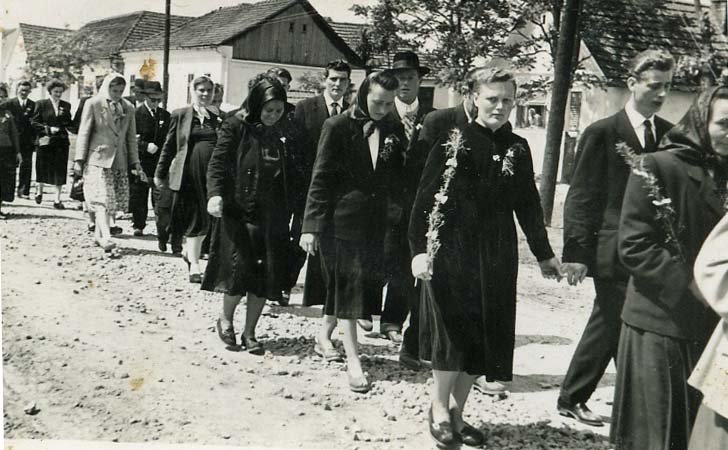
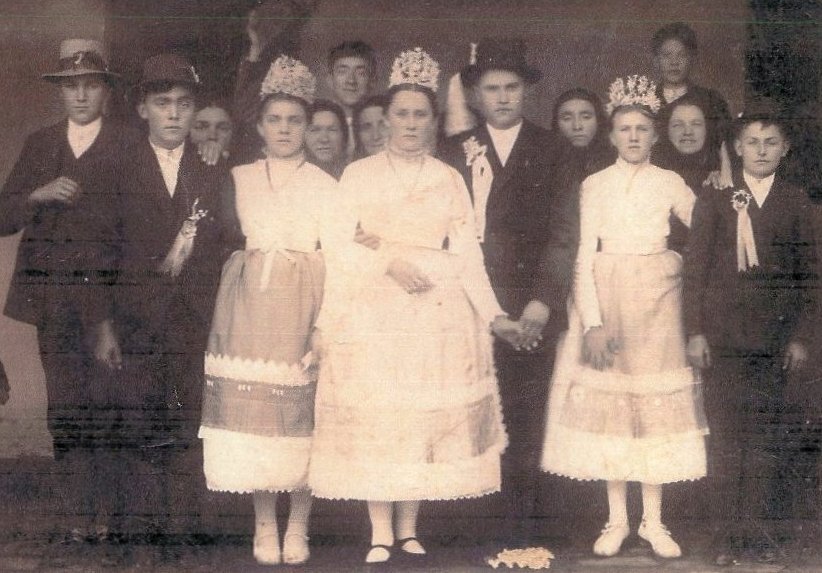
In the past, the rosemary, as a symbol of friendship, love, and faith accompanied the entire wedding. The persons going around to invite the appropriate people to a weeding carried a stick decorated with rosemary. The richly decorated hat of the groom contained branches of rosemary, while the myrtle wreath of the bride, the honour crown of virginity, was worn on the wedding day for the last time. The large Danube-Swabian bridal wreaths and bridal crowns were artistic confections of pearls, leaves, and flowers – all made of wax – but also incorporated branches of myrtle and rosemary. Branches of myrtle made from wax and ribbons were part of the bridal crown in Mramorak (Serbian Banat). On the left lapel of their jacket and blouse, both the groom and the bride wore a little bouquet of rosemary branches. The wedding guests also wore a branch of rosemary: the men in the buttonhole of the jacket, the women mostly in their hands.
When leaving the parental home, where first the parents and then all guests wished the bridal pair faithfulness in marriage and a happy married life, the rosemary branch passed from hand to hand as a symbolic expression of this ritual act. Even during dinner the rosemary remained among the guests. When serving the roast, the waiters presented each guest, amids great cheering, with a glass of wine decorated with rosemary. This was followed by “Hauben” – the removal of the bride’s myrtle bouquet and its replacement by a woman’s bonnet, while singing matrimonial songs – all acceptance rituals for the bride into the group of married women.
Settlers Must Be Married
Because the authorities generally only permitted immigrants to enter the country as families, many of those who were not yet married found themselves forced to marry before departing or, by the latest, somewhere along the way. Records for many such marriages can be found at churches in Danube ports and places such as the Wengen Church in Ulm. During the first decades of settlement, a remarkably large number of widows and widowers were among the couples to wed this way. For example, only one third of the marriages performed in communities of the Bóly (Bohl) estate were for two persons who had never before been married. It was part of the settlers’ survival strategy related to the high mortality rate: Widowed persons could not run a farm alone, so it was often necessary to remarry within just weeks of a spouse’s death.
For many men, marrying a widow was the easiest way to get residency. Young women, too, profited from marrying an older widower, thereby gaining a secure livelihood. It was thus quite common to find significant age differences between spouses. All of this resulted in unusual family structures where children from different marriages lived together. Children who had lost one or both parents stayed in the new family or were placed with foster parents. Their mortality rate was nonetheless exceptionally high, especially among infants and toddlers.
“The Wengen Kirche (Church)”
(submitted by Hans Kopp)
Single men were not allowed to become colonists, so they had to find a bride among the many young maidens and be married before they could board the barges at Vienna to continue their voyage down the Danube to their destination. If your ancestors were Catholic and married there, their marital records will be found at the Wengen Kirche in Ulm. The church was destroyed during WWII. There is a new church erected in its place. Painting in the office of the parish.
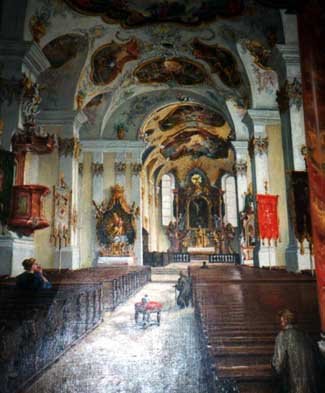
- Weddings in Semlak, Banat by Rose Mary Keller Hughes Link not Found
- Wedding Customs by Dr. Viktor Pratscher
- Marriage and Divorce Laws 1867-1906 for: Austria / Hungary / Croatia and Slavonia
- Civil Marriage Bill 1894: During 1894 Austria-Hungary was much troubled with religious questions. Pressure from high quarters finally induced the Hungarian House of Magnates to pass a Civil Marriage Bill similar to the laws of other countries in Continental Europe. The long wrangling of parties over this and kindred questions which agitated the Austro-Hungarian Empire finally led to another Ministerial crisis at the very close of 1894; whereupon Dr. Wekerle, the Liberal Austrian Prime Minister, was forced to resign. (The Standard History of the World, Vol. 7 Edited by John Herbert Clifford)
- At Weddings
by Peter Lang
Translation by Brad Schwebler
The weddings were the greatest family parties. According to their wealth, more or less guests were invited. The weddings as a rule were held in the village of the bride. Food, drinks, and cakes were donated by the invited, so that even the poorer could organize a large party. The bride was picked up by the groom, the wedding party, and all the guests and led to the church.
After the wedding vows everyone went either to the wedding house or the guesthouse (inn). The brides dance presented the bride to the groom and after some turns the bride was offered to dance by the best man and the groom danced with the maid of honor. Each change lasted about a half minute, until all of the guests had a turn with the bride and groom.
With mixed religion couples the vows were done in the church of the bride, and the children were raised in the religion of the man (boys and girls alike). In this way the religion remained connected to the name bearer, that is, all the same name bearers had the same religion, whether they lived in Beschka or elsewhere.
WEDDING PHOTOS
(various contributors)
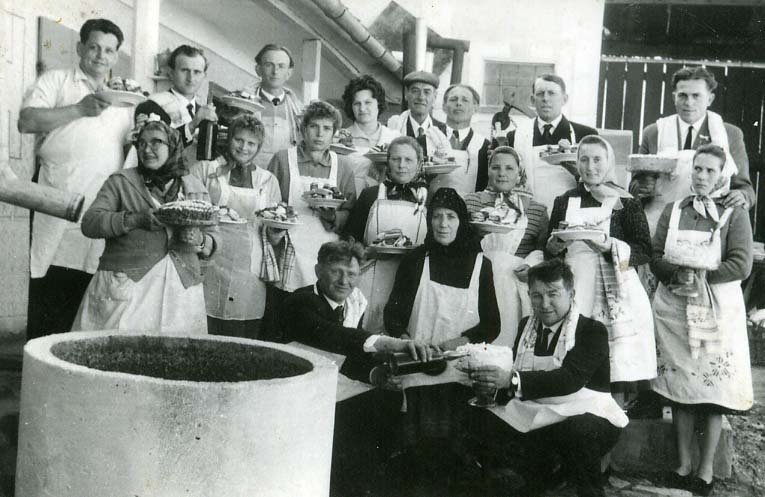
~ Thomas & Altenbach Family / Natalie Schreiber Thomas
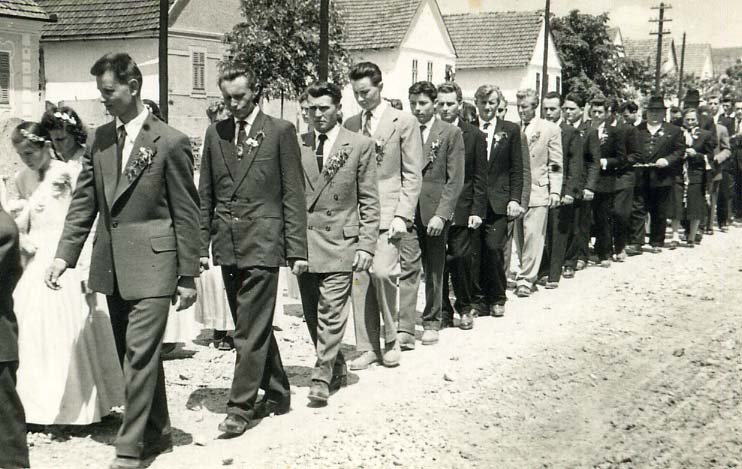
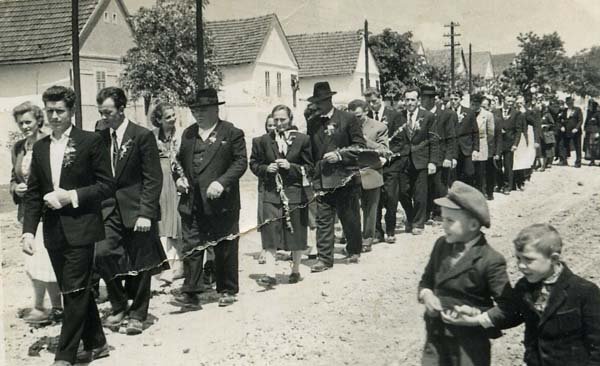
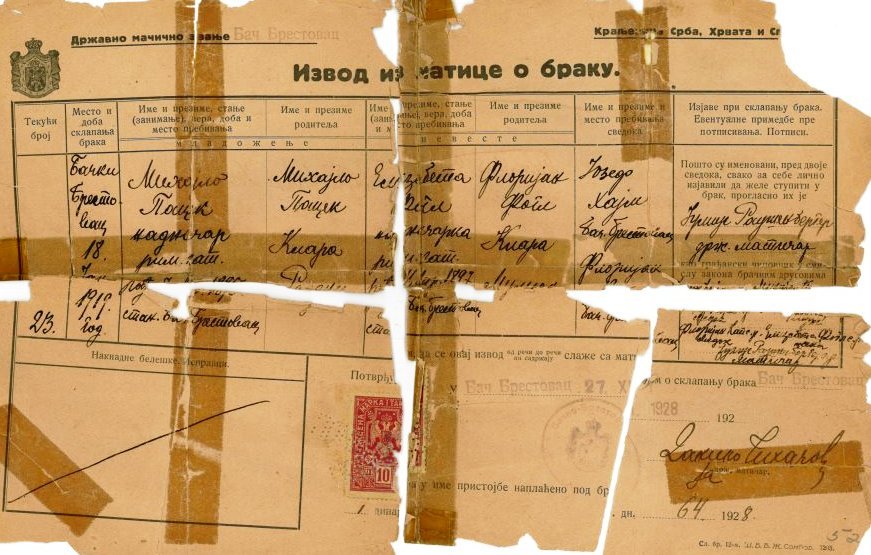
Marriage certificate from Kingdom of SCS.
~ Mike Patzek IV., Column Explanations Translated by Stefan Gužvica:
1st: number of the document (23).
2nd: “Place and time of marriage: Brestowatz, 18th January 1919.” (at least I think it’s January, that’s the torn part of the document).
3rd: “First and last name, occupation, religion, age and residence of the groom: Mihailo Pacek (Michael Patzek), Day laborer, Roman Catholic, (DoB is torn, but it looks like 1893 or 1895), Brestowatz. First and last name of parents: Mihailo Pacek (Michael Patzek), Klara R (last name unreadable).”
4th: “First and last name, occupation, religion, age and residence of the bride: Elizabeta Fogl (Elizabeth Vogel), Day laborer, Roman Catholic, 14th April 1897, Brestowatz
First and last name of parents:
Florijan Fogl (Florian Vogel), Klara Mu (also unreadable)”
5th: “First and last name and residence of the witnesses: Jozef Hajm (Joseph Heim), Brestowatz
Florian (last name unreadable), Brestowatz”.
6th: I can’t read the handwritten text but it only says the name of the state registrar who performed the wedding. His last name ends in “berger”, so I’m guessing he is also a German.
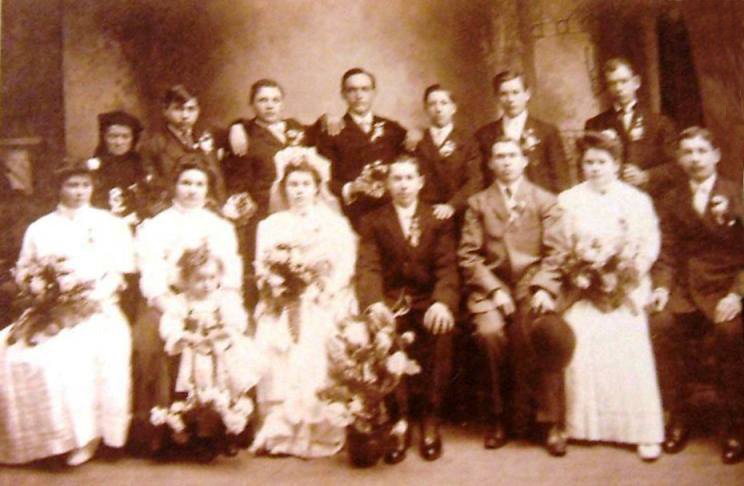
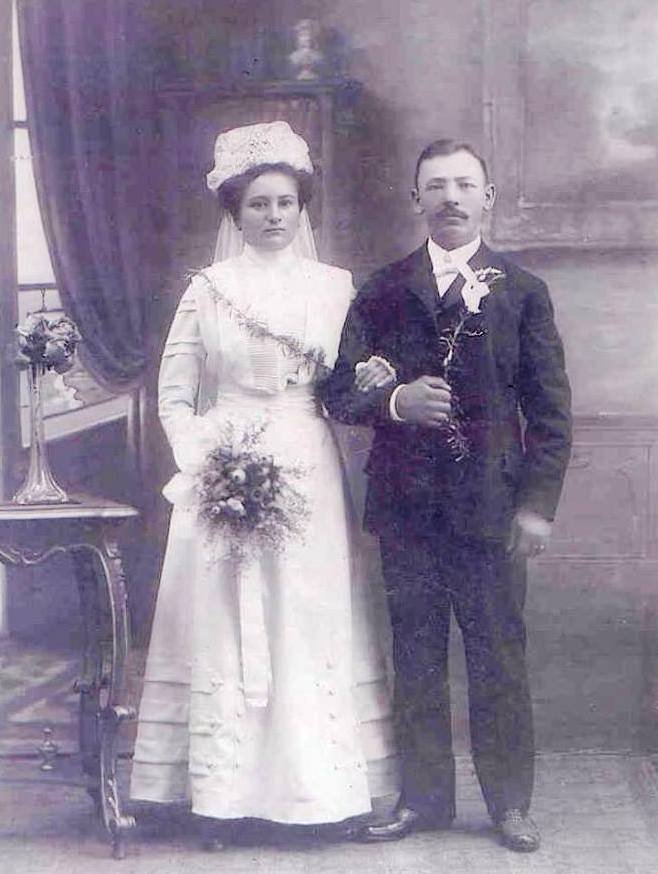
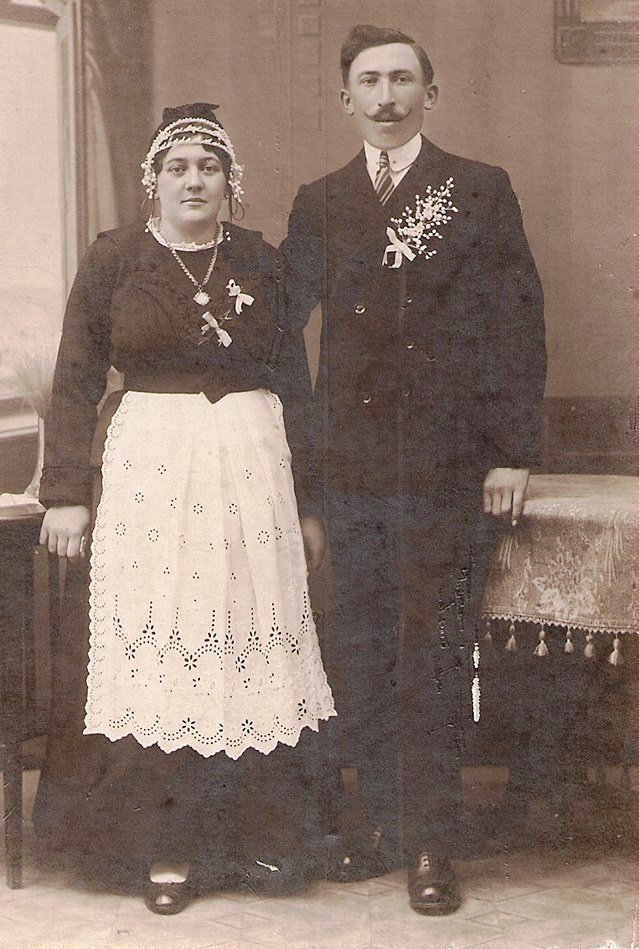
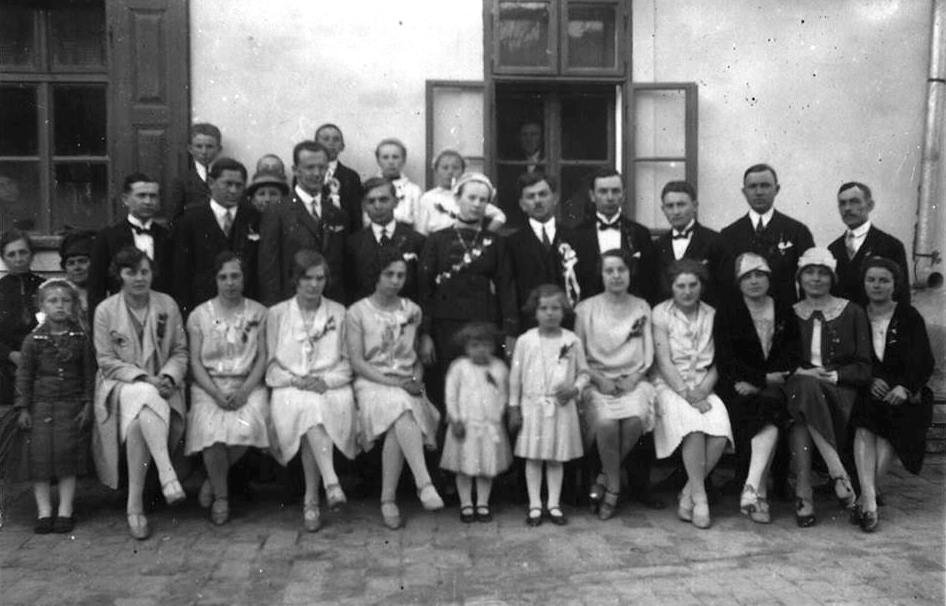
This is their wedding picture. I love it. ~ Carla Rissie
Last updated: 11/09/2026