
OBSERVANCES & FESTIVALS OF OUR ANCESTORS
Monthly Holiday Index: Jan | Feb | Mar & Apr | May | June | July | Aug | Sep | Oct | Nov | Dec
Kirchweih “Consecration of the church”
The consecration or blessing of a church usually took place on a weekend. The date celebrated was determined by the date the church was blessed. As an example, if a church was blessed on Sunday, October 15, 1850, and October 15 in 1853 would fall on a Wednesday, the Kirchweih would be celebrated on the Sunday following that Wednesday. Some Kirchweih dates were later moved to the fall, so that they would not interfere with the work in the fields. Eventually Kirchweih became the most important annual secular festival in every village. To accommodate visitors from other villages, Kirchweih was celebrated on a different weekend in each village.
Traditions
- Traditions and Customs Independent of the Time of Year by Peter Lang
- Customs on Festival Days ‘Remembered by the Danube Swabian’ by Dr. Viktor Pratscher
- Rosemary in the Life of the Danube Swabiansby Hans Gehl
- Customs and Traditions by Stefan Schmied
- “Jeritag” (Jeri Day?) and “Michaelitagby Dr. Viktor Pratscher
- Fresch un Krotte ‘Folksong’ from Saderlach and Alexanderhausen by Nick Tullius
- Many Traditions, One Family by Rebecca Steimle
Harvest Time
- Obsternte “Fruit Harvest” by Alex Leeb
- Threshing – A family celebration
Das Schlachtfest “The Slaughter Festival” – A family celebration
Das Schlachtfest “The Slaughter Festival”
Pre-World War II Danube Swabians cultivated the cherished custom as Schlachtfest (livestock-butchering festival).
The Pig Slaughter, a Family Celebration by Dr. Viktor Pratscher
Butcher’s Soup “Metzelsuppe” & Sow Dance “Sautanz” by Hans Gehl
Das Schlachtfest “The Slaughter Festival” with pictorial by Hans Kopp

January
Januar, Jänner, Jenner, Hartung
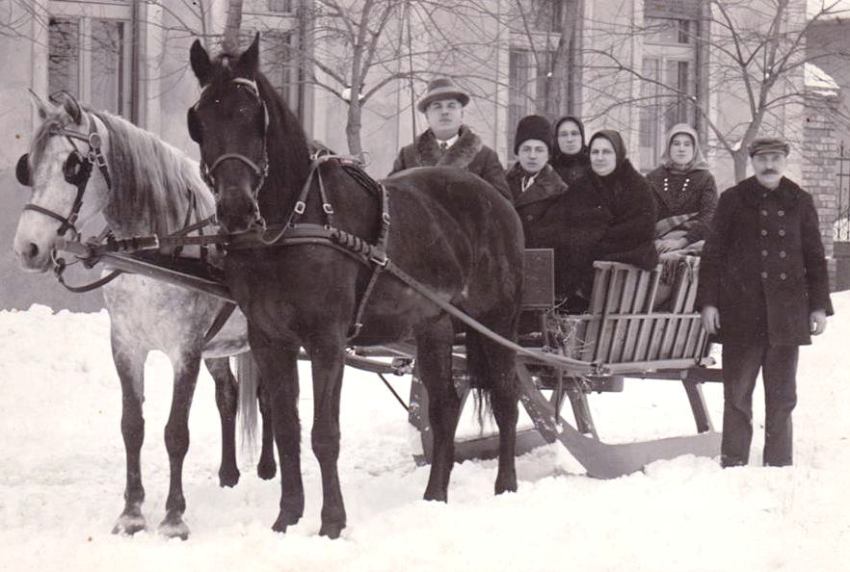
Christine Whatley Feimer, Setschan
- New Year’s Eve by Waltraud Wilhelm & Elisabeth Sadorf
- New Years Day by Dr. Viktor Pratscher
- New Years Wishes by Alex Leeb
- New Year’s Day by Adam Martini
- The Eve Before January 6th ‘Three King’s Day’ by Alex Leeb
- January 6th Heilige Drei Könige by Alex Leeb
- January 6th – “Epiphany”
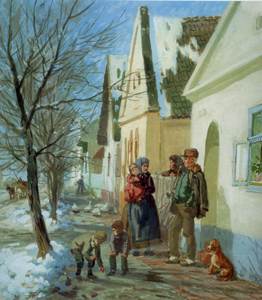
- January 02 – Dorfstrasse im Winter
– ‘Village street in winter’
©Stefan Jäger Art Collection
February
Februar, Hornung
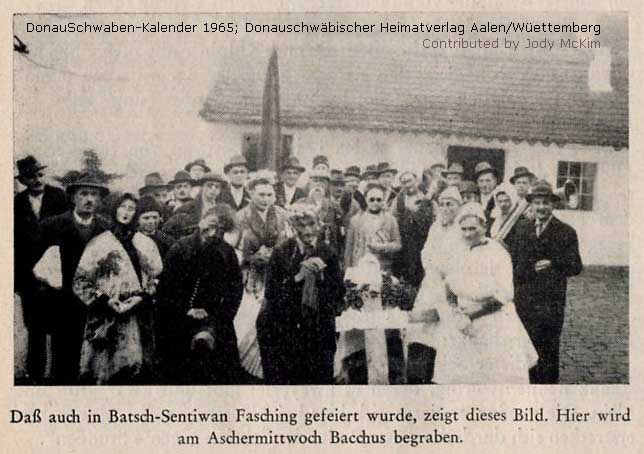
- February 20, 2007 Fasching / Fastnacht (Faschingsdienstag). The official start of the Fasching season is either January 7 (the day after Ephiphany, Dreikönige) or the 11th day of the 11th month (Elfter im Elften, Nov. 11), depending on the region.
- Fastnacht. . . or Carnival (like Mardi Gras) is related to the Germanic word “fasten” (to fast, abstain from eating). Karneval is related to the Latin “carnem levare” (to remove meat). The Faschingsball is the ball held on the weekend before Ash Wednesday.
- “With the last Fasching (carnival) day they reached the high point of their pleasure at carnival time. Some days a complete food package was wrapped up so for example carnival doughnuts had to be given on carnival days, spinach on Green Thursday, and noodles on Good Friday.” [Customs on Festival Days – Fasching – Carnivalby Dr. Viktor Pratscher [The Germans of the Community of Feketitsch]; Translated by Brad Schwebler]
- Faschingball (Festival) was the final Hurrah, prior to Lent. Throughout Lent, sacrifices were made. No music was played, no dancing, no eating meat, etc.; the final weekend before Lent, dances were held on Sunday afternoon and in the evening until early in the morning. We had no costumes and everybody danced together (rich and poor). No weddings throughout Lent, playing cards became popular. We did not use masks at the Faschingball. [ Alex Leeb]
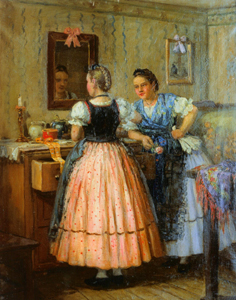
‘In Front of the Mirror’
©Stefan Jäger Art Collection
- Faschingball (Festival)
was the final Hurrah, prior to Lent. Throughout Lent, sacrifices were made. No music was played, no dancing, no eating meat, etc.; the final weekend before Lent, dances were held on Sunday afternoon and in the evening until early in the morning. We had no costumes and everybody danced together (rich and poor). No weddings throughout Lent, playing cards became popular. We did not use masks at the Faschingball. [ Alex Leeb]
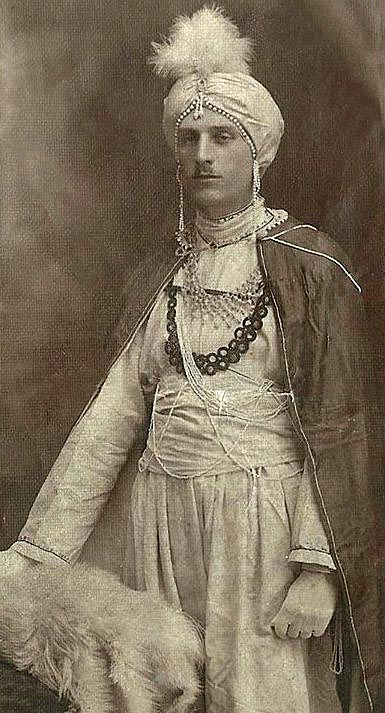
~ Sandra Bruns
March/April
März, Frühlingsmonat / April, Osteren, Ostermonat
We combined March & April because Easter falls more often in April.
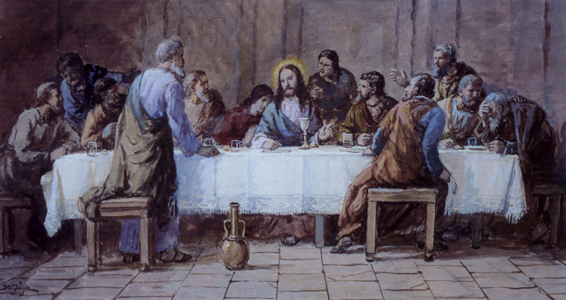
‘The Last Supper’
©Stefan Jäger Art Collection
- Work in the vineyards usually started in mid-March
- Palm Sunday starts the Holy Week
- Holy Thursday before Easter – Green Thursday (German:
- Gruendonnerstag) with first green leaves from your garden.
- Good Friday – Friday before Easter
- “Ratschen” Holy Week in Banat by Nick Tullius
- Danube Swabian Easter Customs by Jacob Steigerwald
- Lebzelter & Easter Customs for the People of Bulkes by Heinrich Hoffmann
- Easter in Yugoslavia in the Danube-Swabian Region by Ruth Elizabeth Melcher
- Easter Remembered by Dr. Viktor Pratscher
- Village Easter Poems
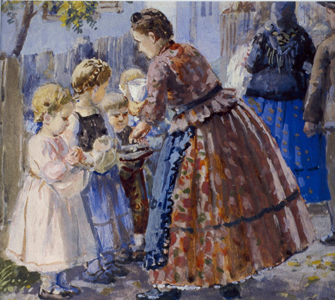
‘At the christening’
©Stefan Jäger Art Collectio
May
Mai, Wonnemonat, Blütemonat
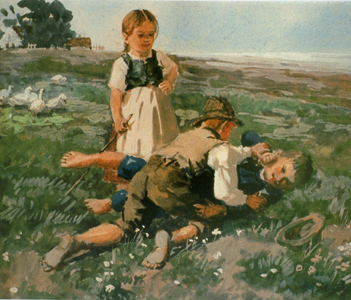
‘Children playing’
©Stefan Jäger Art Collection
- Some Kirchweih dates were later moved to the fall, so that they would not interfere with the work in the fields.
June
Juni, Brachmonat
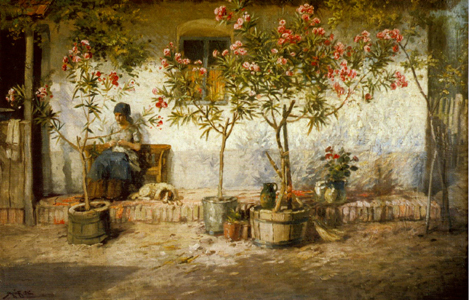
‘Yard with oleander’
©Stefan Jäger Art Collection
- Some Kirchweih dates were later moved to the fall, so that they would not interfere with the work in the fields.
July
Juli, Heuert, Heumonat, Heuet
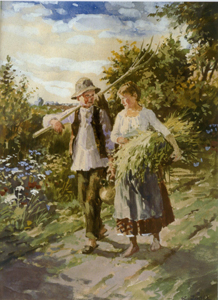
‘On the way home’
©Stefan Jäger Art Collection
- Some Kirchweih dates were later moved to the fall, so that they would not interfere with the work in the fields.
August
August, Erntemonat, Hitzmonat
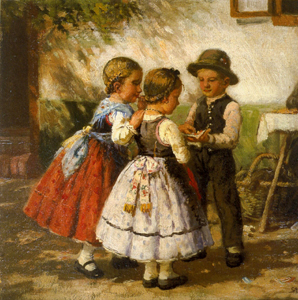
‘Children in their festive costumes’
©Stefan Jäger Art Collection
- Some Kirchweih dates were later moved to the fall, so that they would not interfere with the work in the fields.
September
September, Fruchtmonat, Herpsten, Herbstmonat, 7ber, 7bris
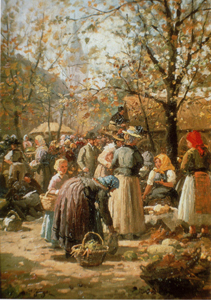
‘Market day in town’
©Stefan Jäger Art Collection
- Customs & Festival Days – Autumn & Harvest Time
On the occasion of the completion of the threshing work the workers went singing through the village pulling their threshing machine decorated with flowers. There was no special harvest festival. The cold midday meal in the vineyard tasted excellent. The effect of the many grapes and cider first comes later. Instead of the former stomping on the grapes Treten (Trippeln), today these are ground and pressed. By Dr. Viktor Pratscher, Read more. - “Life of a Schwob” by Alex Leeb
- Harvest Time in Alexanderhausen
- Some Kirchweih dates were later moved to the fall, so that they would not interfere with the work in the fields.
October
Oktober, Weinmonat, 8ber, 8brisOktober
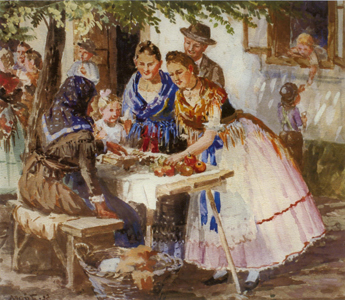
‘Kirchweih market’
©Stefan Jäger Art Collection
- Oct. 31 is All Hallows Eve, the night before All Saints Day
- Some Kirchweih
– “Consecration of the church” events were later moved to the fall, so that they would not interfere with the work in the fields.
November
November, Wintermonat, 9ber, 9bris
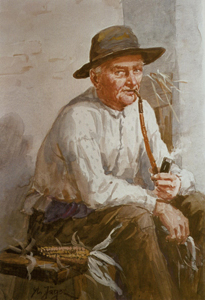
‘The corn stripper’
©Stefan Jäger Art Collection
- Nov 1 – “The Feast of All Saints
The Church commemorates on this day all the Saints in heaven without exception, and thus honors also those who are unknown and who have no public recognition in the liturgy. - Nov 2 – “All Soul’s Day
The practice of recommending to God the souls in Purgatory that we may mitigate the great pains which they suffer and that he may soon bring them into his glory. [All Souls Day is not only a Catholic event, but a day to celebrate the life of your ancestors.] - Totensonntag – “Mourning Sunday”
Observed in November on the Sunday prior to the first Advent Sunday. The Protestant version of All Soul’s Day. - Some Kirchweih dates were later moved to the fall, so that they would not interfere with the work in the fields.
December
Dezember, Christmonat, 10ber, 10bris, Xbris, Xber
©Stefan Jäger Art Collection
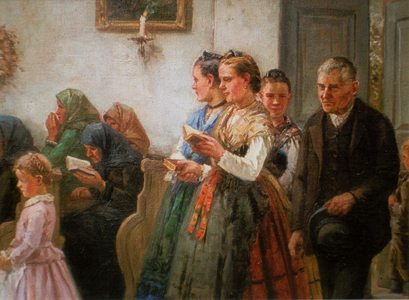
‘In Church’
©Stefan Jäger Art Collection
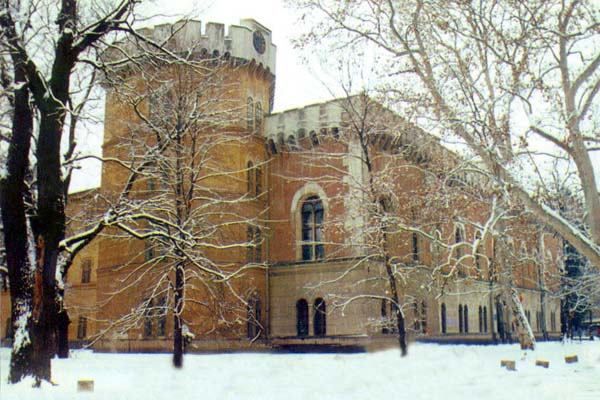
End of the 20th Century
Temesvar 1900 Mehala Archives
- Dec 4 – St. Barbara Day

- Dec 4 – the day our ancestors cut a cherry tree branch (or forsythia), placed in a vase, indoors – to bloom for Christmas Day.
- Advent starts on the fourth Sunday before Christmas and is a countdown to the coming of Christ. Christians mark Advent with special hymns and readings in church; symbolic candles are also lit to light the way for Christ.
- Dec 6 – St. Nicholas Feast Day, which falls early in the Advent season
- Dec 8 – Feast of the Immaculate Conception
- Dec 24 – Christmas Eve
- Dec 25 – Birth of ChristChristkind: Christ Child
Christkindl: Christ Child (Bavarian)
Christkindlmarkt: Christmas Market
Tannenbaum: Fir Tree
Weihnachtsbaum: Christmas tree
Fröhliche Weihnachten: Merry Christmas - Dec 26 – St. Stephen’s Feast Day – King Stefan, who later was declared a saint, was responsible for the political unification and growth of the old greater Hungary which lasted over 100 years and which was one of the aggravating thorns for the Serbian people
.
- Recollections of a Danube Swabian Christmas in the “Old Country” by Frank Schmidt
- Christmas in Fekitsch by Dr. Viktor Pratscher
- Christmas Time Memories by Dr. Viktor Pratscher
- Celebrating St. Nicholas Day in the convent (pre-1945)
by Magdalena Stefan of Alexanderhausen - A Christmas Fairytale by Gerlinde Graf-Saus of Alexanderhausen
- New Year’s Eve by Waltraud Wilhelm and Elisabeth Sadorf of
Alexanderhausen
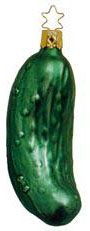
The Controversial Christmas Pickle
In Old World Germany, the last decoration placed on the Christmas Tree was always a pickle, carefully hidden deep in the boughs.
Legend has it that the observant child who found it on Christmas Day was blessed with a year of good fortune and a special gift.
Last updated: 11/01/2026